
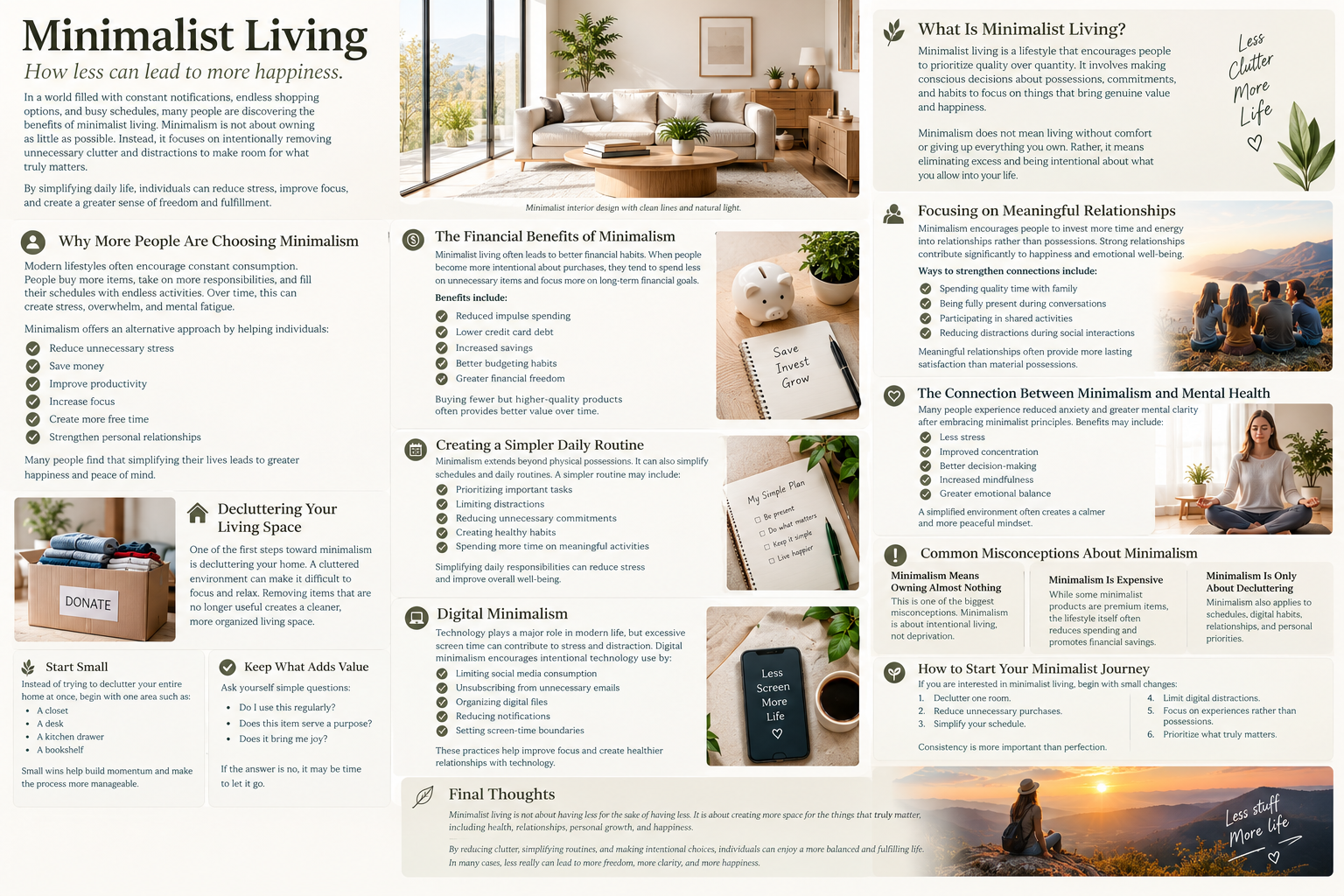
Minimalist Living: How Less Can Lead to More Happiness
In a world filled with constant notifications, endless shopping options, and busy schedules, many people are discovering the benefits of minimalist living. Minimalism is not about owning as little as possible. Instead, it focuses on intentionally removing unnecessary clutter and distractions to make room for what truly matters.
By simplifying daily life, individuals can reduce stress, improve focus, and create a greater sense of freedom and fulfillment.
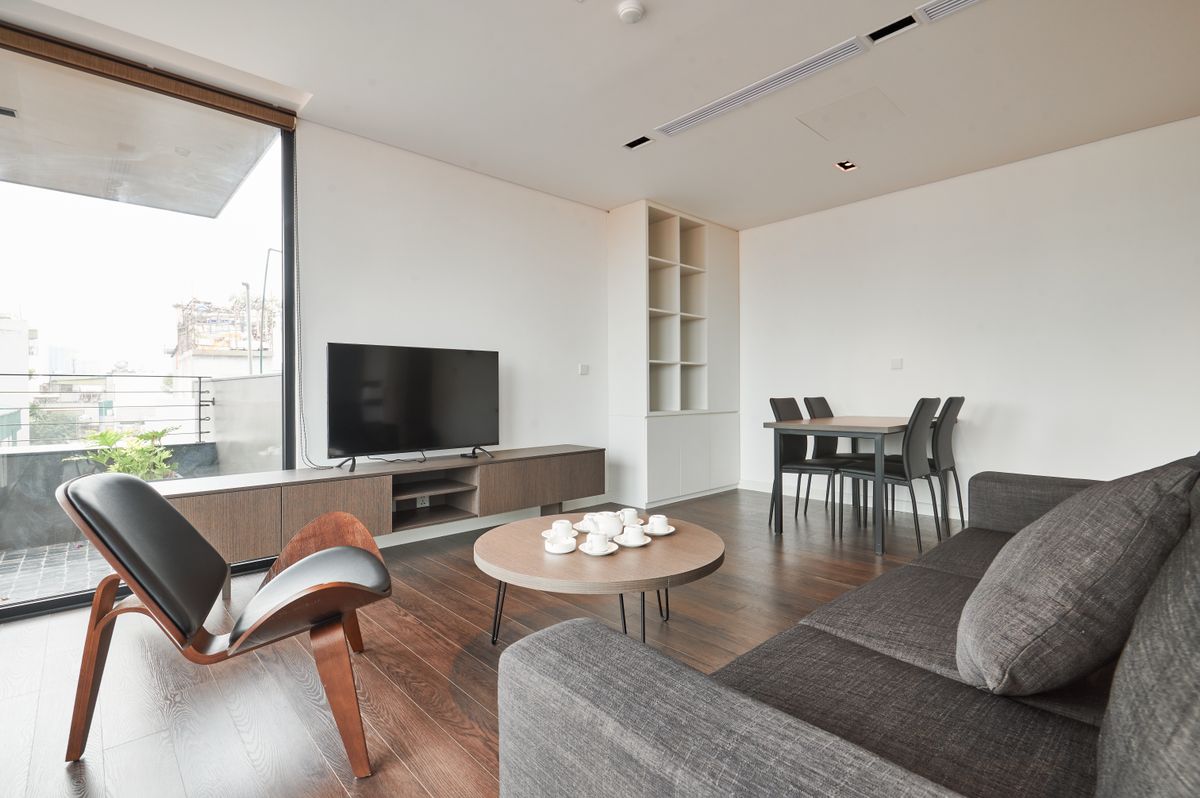
What Is Minimalist Living?
Minimalist living is a lifestyle that encourages people to prioritize quality over quantity. It involves making conscious decisions about possessions, commitments, and habits to focus on things that bring genuine value and happiness.
Minimalism does not mean living without comfort or giving up everything you own. Rather, it means eliminating excess and being intentional about what you allow into your life.
Why More People Are Choosing Minimalism
Modern lifestyles often encourage constant consumption. People buy more items, take on more responsibilities, and fill their schedules with endless activities. Over time, this can create stress, overwhelm, and mental fatigue.
Minimalism offers an alternative approach by helping individuals:
- Reduce unnecessary stress
- Save money
- Improve productivity
- Increase focus
- Create more free time
- Strengthen personal relationships
Many people find that simplifying their lives leads to greater happiness and peace of mind.
Decluttering Your Living Space
One of the first steps toward minimalism is decluttering your home. A cluttered environment can make it difficult to focus and relax. Removing items that are no longer useful creates a cleaner, more organized living space.

Start Small
Instead of trying to declutter your entire home at once, begin with one area such as:
- A closet
- A desk
- A kitchen drawer
- A bookshelf
Small wins help build momentum and make the process more manageable.
Keep What Adds Value
Ask yourself simple questions:
- Do I use this regularly?
- Does this item serve a purpose?
- Does it bring me joy?
If the answer is no, it may be time to let it go.
The Financial Benefits of Minimalism
Minimalist living often leads to better financial habits. When people become more intentional about purchases, they tend to spend less on unnecessary items and focus more on long-term financial goals.
Benefits include:
- Reduced impulse spending
- Lower credit card debt
- Increased savings
- Better budgeting habits
- Greater financial freedom
Buying fewer but higher-quality products often provides better value over time.
Creating a Simpler Daily Routine
Minimalism extends beyond physical possessions. It can also simplify schedules and daily routines. A simpler routine may include:
- Prioritizing important tasks
- Limiting distractions
- Reducing unnecessary commitments
- Creating healthy habits
- Spending more time on meaningful activities
Simplifying daily responsibilities can reduce stress and improve overall well-being.
Digital Minimalism
Technology plays a major role in modern life, but excessive screen time can contribute to stress and distraction. Digital minimalism encourages intentional technology use by:
- Limiting social media consumption
- Unsubscribing from unnecessary emails
- Organizing digital files
- Reducing notifications
- Setting screen-time boundaries
These practices help improve focus and create healthier relationships with technology.
Focusing on Meaningful Relationships
Minimalism encourages people to invest more time and energy into relationships rather than possessions. Strong relationships contribute significantly to happiness and emotional well-being.
Ways to strengthen connections include:
- Spending quality time with family
- Being fully present during conversations
- Participating in shared activities
- Reducing distractions during social interactions
Meaningful relationships often provide more lasting satisfaction than material possessions.

The Connection Between Minimalism and Mental Health
Many people experience reduced anxiety and greater mental clarity after embracing minimalist principles. Benefits may include:
- Less stress
- Improved concentration
- Better decision-making
- Increased mindfulness
- Greater emotional balance
A simplified environment often creates a calmer and more peaceful mindset.
Common Misconceptions About Minimalism
Minimalism Means Owning Almost Nothing
This is one of the biggest misconceptions. Minimalism is about intentional living, not deprivation.
Minimalism Is Expensive
While some minimalist products are premium items, the lifestyle itself often reduces spending and promotes financial savings.
Minimalism Is Only About Decluttering
Minimalism also applies to schedules, digital habits, relationships, and personal priorities.
How to Start Your Minimalist Journey
If you are interested in minimalist living, begin with small changes:
- Declutter one room.
- Reduce unnecessary purchases.
- Simplify your schedule.
- Limit digital distractions.
- Focus on experiences rather than possessions.
- Prioritize what truly matters.
Consistency is more important than perfection.
Final Thoughts
Minimalist living is not about having less for the sake of having less. It is about creating more space for the things that truly matter, including health, relationships, personal growth, and happiness.
By reducing clutter, simplifying routines, and making intentional choices, individuals can enjoy a more balanced and fulfilling life. In many cases, less really can lead to more freedom, more clarity, and more happiness.