
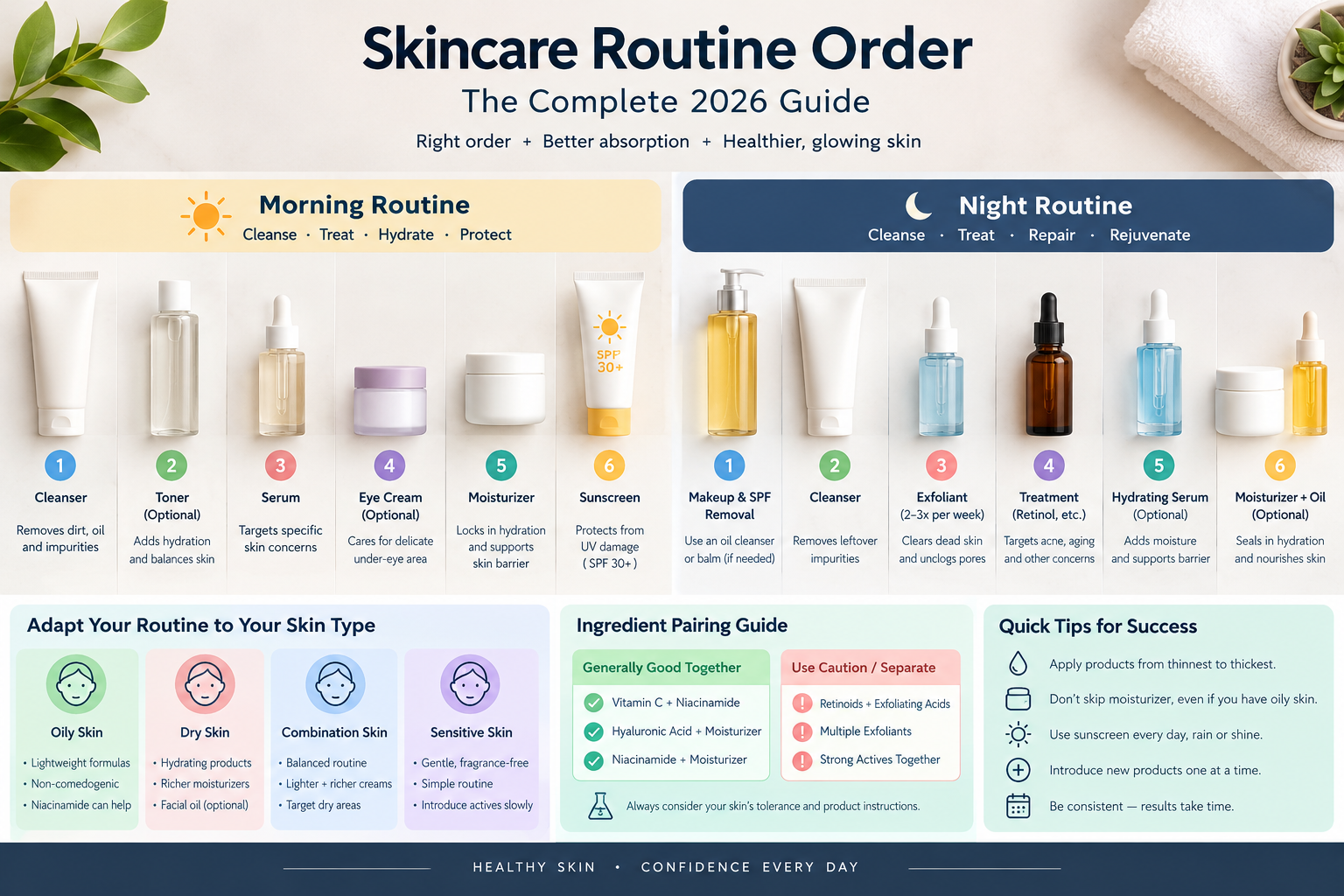
Skincare Routine Order: The Complete 2026 Guide
If your serum feels like it's doing nothing, your moisturizer keeps pilling, or your skin gets irritated after layering products, the problem is usually not the products themselves. It's the order you're using them in.
Here's the good news: a routine that actually works does not need ten steps. For most people, a gentle cleanser, a moisturizer that fits their skin, and daily sunscreen is enough. Everything else (toners, serums, facial oils) is optional and should only be added when there's a real reason.
In this guide, you'll find the correct morning and evening order, how to layer active ingredients without wrecking your skin barrier, which steps you can skip, and how to adjust everything for oily, dry, combination, and sensitive skin.
Why Skincare Routine Order Matters

Order changes how products spread, how they interact, and how they sit on your skin. Some products are built to go on right after cleansing, while others are designed to seal in moisture or form a protective layer on top.
A good starting rule: apply lighter, runnier products first and richer creams or oils last. That said, thinnest-to-thickest is a guideline, not a law. If a product label or your dermatologist says otherwise, that always wins.
There's one more thing worth mentioning: using too many products, especially multiple strong actives at once, is one of the most common reasons people end up with irritated skin. More is not better here.
If you want the official version, the American Academy of Dermatology has a solid guide on product order.
The Correct Skincare Routine Order in the Morning

Your morning routine has three real jobs: clean off whatever built up overnight, add hydration, and protect your skin from UV. Everything else is a bonus.
Step 1: Cleanser
Start with a gentle cleanser that matches your skin type. It removes excess oil, sweat, and residue without stripping your skin dry.
If your skin is dry or sensitive, you might not even need a full cleanse in the morning. A splash of lukewarm water works for plenty of people. If you're oily or sweat overnight, a mild cleanser will feel better.
Skip the hot water and the aggressive scrubbing. If your face feels tight after washing, the cleanser is too harsh for you.
Step 2: Toner (Optional)
Toner is not a required step. If you like using one, pick a formula that actually does something, like hydrating toners with glycerin or hyaluronic acid.
If your skin stings when you apply it, that's a sign to stop. Toner should feel refreshing, not like a punishment.
Step 3: Serum
Serums target specific concerns, but you don't need one for every issue you have. Pick based on what you actually want to improve.
Common options:
- Vitamin C: an antioxidant often used for uneven tone and visible sun damage.
- Hyaluronic acid: pulls water into the skin and helps with hydration.
- Niacinamide: supports the skin barrier and can help with uneven tone.
- Other treatments: pick based on your goal and the product's own instructions.
Use a small amount and let it spread evenly. If you're layering multiple serums, ask yourself honestly whether each one is pulling its weight. Two serums that do the same thing is just one serum wasted.
Step 4: Eye Cream (Optional)
Eye cream isn't necessary for everyone. A regular moisturizer works fine for the eye area if it doesn't irritate you.
If you do use one, apply gently and keep it away from your actual eyes. The skin there is thin, so don't force it.
Step 5: Moisturizer
Moisturizer reduces water loss and supports your skin barrier. And yes, oily skin needs it too. Skipping moisturizer because your skin is oily usually backfires.
Pick based on how your skin feels:
- Oily skin: lightweight lotion or gel.
- Dry skin: richer cream.
- Combination skin: balanced moisturizer, extra cream on dry patches if needed.
- Sensitive skin: simple, fragrance-free formula is a safer bet.
If a moisturizer consistently burns, itches, or turns you red, stop using it. Your skin is telling you something.
Step 6: Sunscreen (Always Last)

Sunscreen is the single most important step in any daytime routine. Go for broad-spectrum SPF 30 or higher.
Apply it generously: face, ears, neck, and any exposed skin. Reapply every two hours outdoors, and after swimming or heavy sweating.
Order matters here: moisturizer first, then sunscreen, then makeup. Don't try to mix sunscreen into your moisturizer to save a step. You'll almost certainly end up with less protection than you think.
The Correct Skincare Routine Order at Night

Nighttime is when you strip off the day and let treatments do their work while your skin repairs itself.
Step 1: Remove Makeup and Sunscreen
If you wear makeup or water-resistant sunscreen, start with an oil-based cleanser or cleansing balm to break it down. Follow with a gentle water-based cleanser if your skin needs it.
This is the famous "double cleanse," but it's optional. If one cleanser gets everything off without irritating you, you don't need a second one.
Step 2: Exfoliant (Only If Needed)
Chemical exfoliants like AHAs and BHAs can help with texture and clogged pores. But they're easy to overuse.
Start with a product suited to your skin, follow the label, and honestly? If the label says you can use it daily, you probably still shouldn't at first. Build up slowly.
And skip the physical scrubs. They're rough on the skin, and there's no real benefit worth the irritation.
Step 3: Treatment or Retinoid
This step depends entirely on your skin and what you're trying to fix.
Retinol and other retinoids are popular for acne and signs of aging, but they can cause dryness, peeling, and redness, especially if you rush into them.
How to start:
- Introduce one new treatment at a time.
- Follow the product label or your dermatologist's directions.
- Start slower than you think you need to.
- Back off if irritation shows up.
Prescription treatments often have their own rules that override any general routine advice you read online. Follow those first.
One important note: retinoids should generally be avoided during pregnancy. If you're pregnant or planning to be, ask your doctor about safer alternatives.
Step 4: Hydrating Serum (Optional)
If your skin needs extra moisture, a hydrating serum with glycerin, hyaluronic acid, or barrier-supporting ingredients can help.
But if your moisturizer is already doing the job and your skin feels comfortable, you don't need another layer. There's no prize for using more products.
Step 5: Moisturizer
Apply moisturizer to lock in hydration and support your skin barrier overnight.
Dry skin usually prefers a richer cream; oily skin often does better with a lighter lotion. If a treatment is drying you out, moisturizer helps, but it doesn't cancel out the irritation entirely.
Step 6: Facial Oil (Optional)
Facial oil is a nice final layer if you enjoy the feel and your skin tolerates it.
Not all oils are the same. Some are light and absorb quickly; others sit heavily on the skin. If yours feels greasy and uncomfortable, it's probably not the right one for you.
You don't need it. Nobody's routine is incomplete without facial oil.
Skincare Routine Order at a Glance
| Step | Morning | Night |
|---|---|---|
| 1 | Cleanser or water rinse | Makeup and sunscreen removal, if needed |
| 2 | Optional toner | Gentle cleanser |
| 3 | Optional serum | Optional exfoliant, when appropriate |
| 4 | Optional eye cream | Targeted treatment |
| 5 | Moisturizer | Optional hydrating serum |
| 6 | Sunscreen | Moisturizer |
| 7 | Makeup, if desired | Optional facial oil |
Think of this as a framework, not a checklist. Your treatments may slot in differently depending on their formulation or what your doctor recommended.
How to Adapt Your Routine to Your Skin Type

Oily Skin
Go gentle. A mild cleanser, a lightweight moisturizer, and non-comedogenic products will do more for you than harsh stripping ever will. Niacinamide works well for some people, but it's not a magic fix.
The biggest mistake oily skin makes? Trying to scrub every trace of oil off. That just makes your skin produce more.
Dry Skin
Focus on gentle cleansing and a moisturizer that actually holds water in. Cream formulas usually feel better than gels here.
If your skin still feels tight or flaky, cut back on actives and switch to a heavier moisturizer. Sometimes less really is more.
Combination Skin
You don't need separate routines for every zone of your face. Use a balanced approach and adjust textures where it matters: lighter on oily areas, richer on dry patches.
Sensitive Skin
Keep it simple. Cleanser, moisturizer, sunscreen. That's it to start.
Add products one at a time. Fragrance-free is a good default, but ingredients matter more than marketing claims, so read the label.
If you get burning, swelling, persistent redness, or a rash, stop the product and see a professional if it doesn't settle.
Which Skincare Ingredients Can You Use Together?

Ingredient pairing depends on the formula, the concentration, and your own skin. There's no universal rule that every active has to be separated, but some combinations are riskier than others.
| Ingredients | General guidance |
|---|---|
| Vitamin C and niacinamide | Usually fine together in modern formulas. Introduce slowly if you're sensitive. |
| Hyaluronic acid and moisturizer | Classic pairing. Works well. |
| Niacinamide and moisturizer | Easy combination, rarely causes issues. |
| Retinoids and exfoliating acids | Can be too much together, especially for beginners. Alternate nights. |
| Multiple exfoliating products | Irritation waiting to happen. Don't stack them. |
| Prescription treatments and other actives | Follow your doctor's instructions, not general advice. |
Don't add multiple strong treatments at once. If your skin is already irritated, back off and let it heal with gentle cleansing and moisturizing.
Common Skincare Routine Mistakes to Avoid
- Applying sunscreen before moisturizer. Moisturizer first, then SPF.
- Stacking too many actives. More products does not mean better skin.
- Skipping moisturizer because you're oily. Oily skin still needs hydration.
- Over-exfoliating. This is one of the fastest ways to damage your barrier.
- Treating every step as mandatory. Toner, eye cream, facial oil, and multiple serums are optional for most people.
- Changing everything at once. Introduce new products one at a time so you know what's actually working.
- Ignoring the label. Formulations differ. Follow the instructions on your specific product.
And you don't need to wait 30 or 60 seconds between every single step. Let things settle enough to apply the next layer comfortably. That's it.
Expert Tips for Better Skincare Results

Keep a simple skin diary. Note what you started using and when. It makes it way easier to spot what helped and what caused a breakout.
Patch test new products. Follow the manufacturer's instructions. A patch test isn't a guarantee, but it catches a lot of problems early.
Give it time. Hydration improves fast, but acne and uneven tone take weeks or months. Don't jump ship after a week, and don't keep buying new products hoping one will finally "work."
Adjust to the season. Weather and humidity change how your skin behaves. Make small tweaks instead of rebuilding your whole routine every time something shifts.
Be skeptical of trends. Peptides, PDRN, exosomes: every year there's a new "miracle" ingredient. Popularity doesn't mean it works. Look at the evidence and whether it fits your actual needs.
Frequently Asked Questions
What is the correct order for skincare products?
Morning: cleanser, optional toner, serum, moisturizer, sunscreen. Night: remove makeup and sunscreen if needed, cleanse, apply treatments, moisturize. Adjust based on your specific products.
Can I skip toner?
Yes. Toner is optional for most people. Cleanser, moisturizer, and sunscreen alone make a solid basic routine.
How long should I wait between skincare steps?
There's no universal rule. Wait long enough that the next product goes on comfortably. Prescription treatments may have specific instructions, so follow those.
Do I need sunscreen indoors?
It matters most when you're near windows or spending time outdoors. Regular indoor screen use alone isn't a strong reason to apply sunscreen for "blue light." Follow evidence-based sun protection advice for your situation.
Can I use niacinamide and vitamin C together?
Yes, most modern formulas are fine together. If your skin is sensitive, introduce them gradually or use them at different times of day.
How do I know if my skin is purging or reacting to a product?
Purging is a specific thing that happens with certain acne treatments; it's not just "any new breakout." Burning, itching, swelling, or a rash usually means irritation or a reaction. Stop the product if something feels wrong and talk to a professional if needed.
Should I use retinol every night?
Not necessarily. It depends on the formula, your skin's tolerance, and what you've been told to do. Some people never build up to nightly use, and that's fine.
Conclusion: Build a Routine You Can Maintain
The best skincare routine order is the one you'll actually stick to. Start with gentle cleansing, proper moisturizing, and daily sun protection. Add serums, exfoliants, or retinoids only when they solve a specific problem.
You don't need every trending ingredient or a ten-step routine. Keep it simple, follow the labels, and see a professional if something isn't improving.
Ready to build your routine? Check out our Skincare 101 Guide for ingredient basics, browse the All Skincare Guides section, and read our Sensitive Skin Survival Guide if your skin reacts to everything.
Editorial note: This article provides general educational information and is not a substitute for personalized medical advice. Consider review by a qualified dermatologist before publication.