
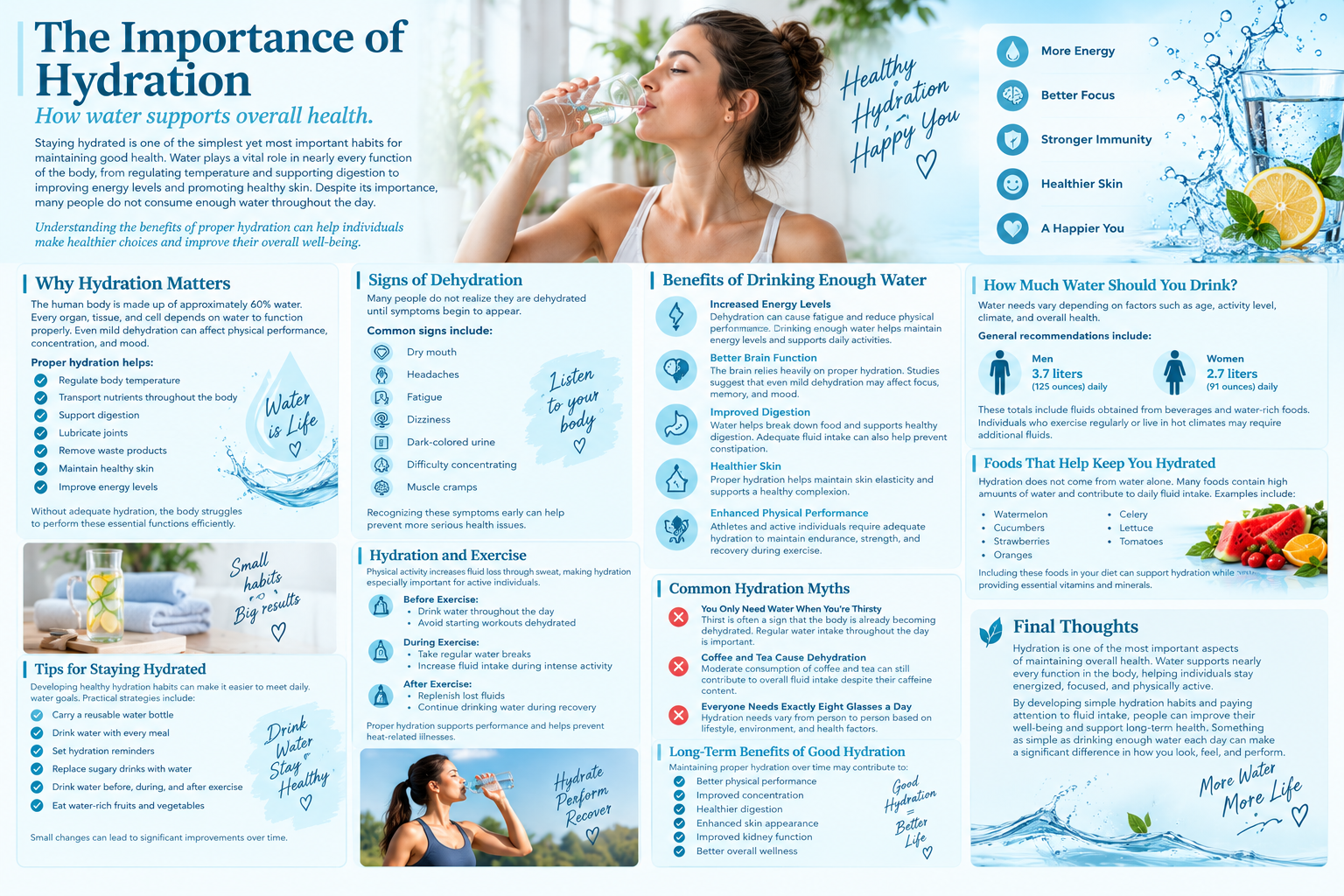
The Importance of Hydration: How Water Supports Overall Health
How water supports overall health.
Staying hydrated is one of the simplest yet most important habits for maintaining good health. Water plays a vital role in nearly every function of the body, from regulating temperature and supporting digestion to improving energy levels and promoting healthy skin. Despite its importance, many people do not consume enough water throughout the day.
Understanding the benefits of proper hydration can help individuals make healthier choices and improve their overall well-being.

Why Hydration Matters
The human body is made up of approximately 60% water. Every organ, tissue, and cell depends on water to function properly. Even mild dehydration can affect physical performance, concentration, and mood.
Proper hydration helps:
- Regulate body temperature
- Transport nutrients throughout the body
- Support digestion
- Lubricate joints
- Remove waste products
- Maintain healthy skin
- Improve energy levels
Without adequate hydration, the body struggles to perform these essential functions efficiently.
Signs of Dehydration
Many people do not realize they are dehydrated until symptoms begin to appear.
Common signs include:
- Dry mouth
- Headaches
- Fatigue
- Dizziness
- Dark-colored urine
- Difficulty concentrating
- Muscle cramps
Recognizing these symptoms early can help prevent more serious health issues.
Benefits of Drinking Enough Water
Increased Energy Levels
Dehydration can cause fatigue and reduce physical performance. Drinking enough water helps maintain energy levels and supports daily activities.
Better Brain Function
The brain relies heavily on proper hydration. Studies suggest that even mild dehydration may affect focus, memory, and mood.
Improved Digestion
Water helps break down food and supports healthy digestion. Adequate fluid intake can also help prevent constipation.
Healthier Skin
Proper hydration helps maintain skin elasticity and supports a healthy complexion. While water is not a cure for all skin concerns, it contributes to overall skin health.
Enhanced Physical Performance
Athletes and active individuals require adequate hydration to maintain endurance, strength, and recovery during exercise.
How Much Water Should You Drink?
Water needs vary depending on factors such as age, activity level, climate, and overall health.
General recommendations include:
- Men: Approximately 3.7 liters (125 ounces) daily
- Women: Approximately 2.7 liters (91 ounces) daily
These totals include fluids obtained from beverages and water-rich foods.
Individuals who exercise regularly or live in hot climates may require additional fluids.
Foods That Help Keep You Hydrated
Hydration does not come from water alone. Many foods contain high amounts of water and contribute to daily fluid intake.
Examples include:
- Watermelon
- Cucumbers
- Strawberries
- Oranges
- Celery
- Lettuce
- Tomatoes
Including these foods in your diet can support hydration while providing essential vitamins and minerals.

Tips for Staying Hydrated
Developing healthy hydration habits can make it easier to meet daily water goals.
Practical strategies include:
- Carry a reusable water bottle
- Drink water with every meal
- Set hydration reminders
- Replace sugary drinks with water
- Drink water before, during, and after exercise
- Eat water-rich fruits and vegetables
Small changes can lead to significant improvements over time.
Hydration and Exercise
Physical activity increases fluid loss through sweat, making hydration especially important for active individuals.
Before Exercise:
- Drink water throughout the day
- Avoid starting workouts dehydrated
During Exercise:
- Take regular water breaks
- Increase fluid intake during intense activity
After Exercise:
- Replenish lost fluids
- Continue drinking water during recovery
Proper hydration supports performance and helps prevent heat-related illnesses.

Common Hydration Myths
You Only Need Water When You're Thirsty
Thirst is often a sign that the body is already becoming dehydrated. Regular water intake throughout the day is important.
Coffee and Tea Cause Dehydration
Moderate consumption of coffee and tea can still contribute to overall fluid intake despite their caffeine content.
Everyone Needs Exactly Eight Glasses a Day
Hydration needs vary from person to person based on lifestyle, environment, and health factors.
Long-Term Benefits of Good Hydration
Maintaining proper hydration over time may contribute to:
- Better physical performance
- Improved concentration
- Healthier digestion
- Enhanced skin appearance
- Improved kidney function
- Better overall wellness
Consistent hydration supports both short-term and long-term health goals.
Final Thoughts
Hydration is one of the most important aspects of maintaining overall health. Water supports nearly every function in the body, helping individuals stay energized, focused, and physically active.
By developing simple hydration habits and paying attention to fluid intake, people can improve their well-being and support long-term health. Something as simple as drinking enough water each day can make a significant difference in how you look, feel, and perform.